Erica
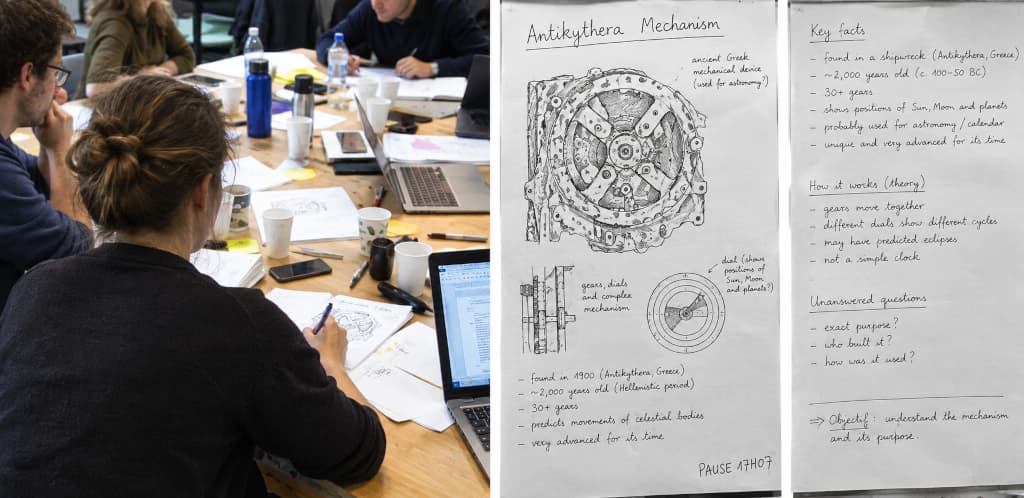
Did you know that the French bank Société Générale once asked a group of remote viewers to help find… a prototype watch for micropayments?
As part of a project called “Watch,” participants were given a task: describe a “mystery object” as it would look on December 31, 2015. Employees then identified recurring features, including colors, textures, gestures, buttons and wrist position, and converged on the idea of a watch. The designer then turned the information into sketches. At the end, the sponsor revealed the real subject: a micro-payment watch.
In fact, remote viewers can describe objects from both the future and the past. As you develop your extrasensory abilities, you can do things that may seem pretty incredible at first. And we already know how to get started.
It’s best to begin with basics: learn to sense the energy of objects, tell the difference between something living and non-living. If you’ve already noticed unusual abilities in yourself, you can jump straight into remote viewing.
Don’t want to spend time getting everything ready? There are already apps for remote viewing exercises at Apple Store or Google Play. They can help you get better at trusting your gut.
By the way, there’s a whole range of antique objects whose dates researchers still can’t agree on.
Antique Objects in Question
One interesting example is the Antikythera Mechanism, an ancient Greek device discovered in a shipwreck near the Greek island of Antikythera. It is often described as an ancient analog computer because of its complex system of gears used to track astronomical cycles.
Researchers generally place the mechanism somewhere around 100–150 BC, but the exact date of its construction is still debated. There are also questions about where it was made and who designed it. Some theories have even connected its technology with the tradition of Archimedes and his school.
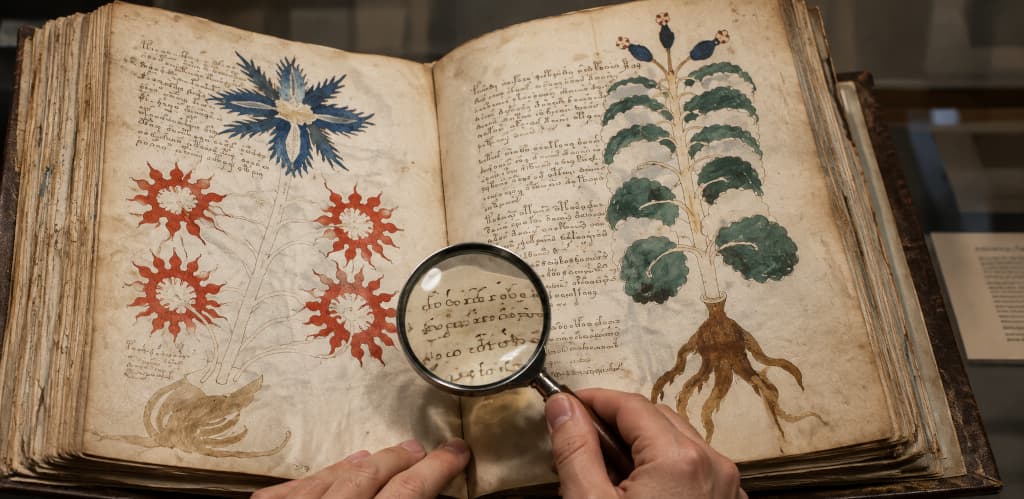
Next is the Voynich Manuscript. Carbon dating points to the early 1400s, but nobody agrees on its strange writing system, origin, or exactly what the text was intended to mean. Some people have even suggested that the entire manuscript could be an elaborate hoax.
The Piri Reis Map (1513) is dated precisely. What’s disputed is what the mapmaker was working from, some researchers claim it shows a coastline that shouldn’t have been known at the time.
By the way, there’s a second category worth training on: objects that turned out to be fakes, but only after real scientific back-and-forth. The Nampa figurine, a small clay doll found in Idaho, was initially estimated at two million years old, which would have rewritten the entire timeline of human presence in the Americas. It’s now considered a 19th-century hoax.
The Glozel artifacts from France caused another long-running archaeological controversy. Thousands of objects were found at the site, including tablets, pottery and unusual inscriptions. Different researchers reached very different conclusions about their age and authenticity. Later investigations found evidence that many of the objects were not what they had originally been claimed to be.
The Acámbaro figurines from Mexico are another famous example. Thousands of small clay figures were discovered in the 1940s, including figures that appeared to depict dinosaurs. Supporters argued that they were ancient, while mainstream archaeological research has not accepted them as evidence of humans living alongside dinosaurs.
Remote Viewing an Antique
We would like to separately explain the protocol itself, because not everyone knows how it works.
There is a theory that humans have abilities beyond the familiar senses of seeing and hearing, etc. These abilities are not necessarily unique to gifted individuals. They may be more developed in some people from birth, but the remote viewing method, which was developed and used by the U.S. military in the 1980s, is aimed at identifying and developing paranormal abilities in any human through specially designed strict blind protocols, documentation, and feedback.
It is not simply, “I felt this, so this must be how it is.” No.
First, you do not know what target you are describing. You are blind to the subject. You only have a code made up of letters and numbers, and there is a real target behind that code. Using the code, you begin describing your first impressions — everything that comes to you.
With each stage, the process becomes more complex and detailed. For example, you may be asked to “feel the target,” “to look at it from above,” and you have to record the impressions you get.
There are six stages in total. They are designed so that your brain is engaged as fully as possible, involving both the right and left hemispheres.
Through feedback, you understand how accurate you were and how closely your notes correspond to the actual object from the target picture.
As for the date, which is what interests us most in the context of antiques, it is important to frame the task itself. The task is the cue you are given to limit viewers. For example you can be asked: “Go back in time to when the object in the photo was created.”
What you see will not necessarily be 100% accurate. That is exactly why practice is necessary. A lot of it.
And when your hit rate exceeds what would be expected by chance, you can start talking about a certain degree of reliability in your results.
By the way, there have been cases where remote viewers correctly described buildings simply from a code, known as target number. They pointed out rooms that supposedly did not exist, which later turned out to have existed because the building had been remodeled in the past.
It is all very interesting. In our opinion, this kind of experience provides useful clues, trains your intuition, and is worth paying attention to.


 Tim Absalikov